Tuesday, 18 February 2025

WHY NOT HAVE ONE NIGERIA?

The idea of “One Nigeria” is one multifarious, notorious as well as controversial issue, even up to the international scene. In 2005, the United States’ Crime Investigation Agency (CIA) published a report warning that Nigeria, the seventh most populous country in the world, could disintegrate within 15 years. At the time, that prophecy was dismissed by most Nigerians as baseless alarmism. However, recent events have prompted a re-evaluation of that gloomy forecast. Sometime in January 2012, Nigerian Nobel laureate Wole Soyinka stated that Nigeria is "already progressing towards a defacto break up." Many have begun questioning the result 1914 British colonial decision to lump together more than 250 ethnic groups, differing in culture and social structure. What seemed to be a blessing in disguise is turning out to be disguised curse!

A number of snags seem to plague the current structure, as well as the very existence of the country. One of these problems, and perhaps the predominant, is the surge in ethnic and religious hostility fuelled by the bigoted violence, a problem which the “central government” has been incapable of quelling. The Independent People of Biafra as well as the Boko Haram will be taken as case studies to shed more light on this scorn.

On 30 May, 1967, the eastern part of the country, dominated by the Igbo ethnic group (including Efik, Annang, Ibibio, Ijaw), announced secession under then Colonel Ojukwu after a pogrom of Igbos living in the north, and referring to themselves as The Republic of Biafra. The state was given official recognition by Gabon, Haiti, Ivory Coast, Tanzania and Zambia and even received assistance from Israel, France, Spain, Portugal, Norway, Rhodesia, South Africa and the Vatican City, to mention but a few worldwide support the Republic acquired (as at that time). However, the central government eventually battled the breakaway republic into submission, at the cost of more than 1 million lives. In the fantasy that these idealists had laid to rest their cravings to secede, around the early parts of 2015, the whole Biafra talk resurfaced amidst the political, economic and ethnic tensions in the country. Ralph Uwazuruike of the Movement for the Actualization of the Sovereign State of Biafra (MASSOB), a rogue group, is said to have been the tool in rekindling this movement. One Nnamdi Kanu of the Independent People of Biafra, another Biafran compatriot, who afforded the movement greater impetus was since charged to court until recently when the ECOWAS court cleared him of all charges. This has also led to another imminent tribal clash as the Northern Youth Coalition wrote an open letter, dated on the 19th of June, 2017, to the Acting President, Prof Yemi Osinbajo, formally demanding that the Igbos be allowed to form Biafra, but that they must “vacate our (North) land peacefully”.
On another pedestal, the north-eastern based Boko Haram Islamic extremist are currently wreaking havoc in Nigeria, posing menace against western education, ramping up their terrorist attacks and demanding that Sharia law be implemented throughout a country where roughly half the population is Christian. Since its insurgency started in 2009, it has killed about 20,000 persons and displaced about 2.3 million from their homes and was even ranked as the world’s deadliest group by the Global Terrorism Index in 2015. Its most notorious action was the abduction of the 276 schoolgirls from Chibok in April 2014, for which the federal government received worldwide criticism. Boko Haram has said, per its former leader, Abubakar Shekau, that those originally from the south who are now living in the north should return to where they came from or face death. In response, some southern leaders have threatened retaliation against the northerners living in their region.
The question at this point is whether, in the face of all these, we really require a breakup? Many Nigerians have opined that we should engineer a peaceful breakup and let new nations build more functional political entities with rulers who share the same values as their citizens. This sounds simple and straight forward, but on reflection, the belief of a breakup improving the state of things is based on false premises. The first of these is that there is a viable configuration under which Nigeria could split today in a peaceful manner. In reality, even a simple north-south divide or even a north-east-west divide simply won't fly. In light of the "winner-takes-all" mentality that pervades modern-day Nigerian society, no ethnic group will want to accept the role of "second fiddle" in a new entity. Prima facie, there are 3 major tribes in Nigeria, but under these major tribes are other major and minor ethnic strata. With the “second to none” mentality of these various major ethnic groups, a division will have to see a couple of new countries, posing a threat of anarchy. The Former Minister of Aviation, Femi Fani-Kayode, a supporter of Biafra’s movements for secession recently stated that “Oduduwa Republic shall be established no more than 6 months after Biafra has been created. Then we shall be free. Time for referendums!”
How many of these regions will eventually be able to subsist independently? Are conflicts between and among them not inevitable, such as between Ethiopia and Eritrea for example? At least, the post-Yugoslavian states could count on the European Union for help. Post-Nigerian states would have no such luxury has many states and bodies international on the international have shown displeasure to secession. On the 6th of July 2017, Mr Paul Arkwright, the British Envoy in Nigeria, in dismissing the claims by some secession agitators in parts of Nigeria that the British government is backing their agitation to break Nigeria stated, “In a word, No. We have nothing to do with any agitations and acts to break up Nigeria. We strongly support the unity of Nigeria.”
It is noteworthy that the issue of secession is not one peculiar to Nigeria alone. One example was where David Cameron, the former British prime minister, allowed Scotland to hold an independence referendum in 2014, although Scots voted against independence. Another was in Spain, where Catalonia held a nonbinding independence vote in November 2014. However it has been declared by Carles Puigdemont, the President of the region, that Catalonia will hold a referendum on independence on October 1, 2017.
In my humble opinion, a solution to the socio-political and economic problems in this country is not a break up, but true Federalism. For a state to work out, its socio-political structure must match and be in tandem with its legal system. We often refer to Nigeria as a federal state, as the provisions of the constitution gives us reason to do so. Nevertheless, what we operate is a superficial federalism, or to put aright, a unitary system of government, where the center wields powers, over and above other component parts. True Federalism is unity in diversity. This system allows for division of power between two or more levels of government with equal status. Both the federal and the state governments would have power to make laws and both governments would be autonomous of the other. This means that States should be given authority to manage some local concerns affecting themselves such as police, schools, hospitals, road maintenance, mineral resources, a level of the judiciary and so on. Under this arrangement, the Federal Government will be expected to manage other affairs such as the army, diplomatic/consular issues, citizenship, railways, Airways, Foreign Affairs, certain aspects of banking policy, and Judiciary.
Until and unless the Federal government of Nigeria becomes less powerful than it is now, we will continue to have the existing clashes that have become so prevalent and obvious in the country. Powers should be shared between the Federal and states to the extent that centre will be less lucrative than it is now. What we have in Nigeria now is purely unitary system where authority rests with the national government and the state is only able to exercise those authorities handed down to them by the national government.
In the words of the Apostle of the gospel of Restructuring in Nigeria and former Vice-President of the Federation, Alhaji Atiku Abubarkar, the most potent catalyst of ethnic disharmony is the over-concentration of powers in the Federal government. On the first reported case of the attacks in the East by Fulani Herdsmen, the state governor, was incapable of gearing up the police into action as the power to control the police is vested in the President and him alone. The Niger Delta Militants rose up because they felt the federal was to corrupt in handing “their oil” and the sharing of resources. These and many other examples can be likened to excessive powers in the federal government.
Although it will be efemira to dwell on rhetorics when practicability is required, it’s pertinent to point out the popular saying which states that "united we stand, divided we fall". The call for the country's break up should not be seen as a solution but collective wisdom and effort of her citizens.


Fabusiwa Tayo O.
Faculty of Law
400L

Friday, 14 February 2025

The Gains of Integrity in Nation Building


Mrs. Adebimpe, standing by her Toyota Camry, stares at Tade straight into the eye. 'Are you trying to deny the fact that you cheated me by reducing my #1000 worth of petrol? She asks angrily. Tade stares at the floor ashamed and playing with his fingers. The Petrol station manager who had been watching from a reasonable distance all along, strolls to the scene and testifies that he actually noticed from the screen view how Tade had stopped the flow at 85 litres instead of completing the 125 litres which is commensurate to the #1000 naira that she paid. Tade had also manipulated the daily account in the sales book. He needs no prophet to tell him that it's time he kissed his job goodbye.

The quality of being honest and having and having strong moral and ethical principles and values cannot be over emphasized.

Signs of people who lack Integrity includes;

Excessive selfishness i.e considering just your comfort and happiness at the expense of others.

Insincerity and lies in the sense that your intentions don't even match the results.

Frequent compromises in order to gain temporary wealth and recognition.

However, the gains of integrity will convince you that it pays to actualize it.

Integrity earns you trust, influence and great opportunities to work with people.

It saves you from scandalous implications because your good name is priceless and valuable.

Integrity will also influence or help you make wise life decisions that will lead and land you somewhere safe.

With Integrity, you have nothing to fear, since you have nothing to hide

With Integrity, you will do the right thing, so you will have no guilt

While staying home and staying safe, keep a right attitude and do the right thing even when it's hard!


Image from Google Images

Tuesday, 11 February 2025

How to Buy WAEC Result Checker pin online in Nigeria 2025

In the course of this article, we will be providing an overview of what the WAEC result checker PIN is, explain the benefits of buying it online, outline basic steps for buying it online, best online platform to buy Waec Pin for Usage and Reseller, offer tips for using it effectively and how to check your Waec result. All these make this blog post a must read if you don’t want any hassle with accessing your WAEC scratch card PIN online.

Using the WAEC result checker PIN effectively is essential for accessing your WAEC results quickly and securely online.

Accessing your WAEC results can be a hassle if you don’t have the right information. You need to have a WAEC result checker PIN in order to access your results online. It is important to note that buying this PIN has become easier and more convenient than ever before due to it's availability online.

What is the WAEC result checker PIN?

The WAEC result checker PIN is a unique code that provides access to the West African Examination Council (WAEC) website - waec.org , allowing users to view their examination results without having to leave home.

This PIN allows for secure and convenient access to your results in a timely manner. Purchasing the WAEC result checker PIN is easy and can be done through various e-commerce sites like Jumiabot Networks and Jumiabot App-  and more.

How to Buy WAEC  Result Checker pin online in Nigeria 2024
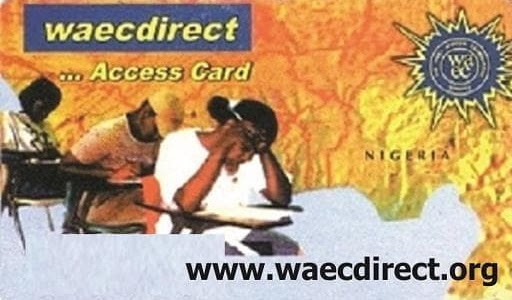
WAEC Scratch Card - Credit: waec.org

All you need to do is register on the website, verify your Account to get your Wallet Account Number, Fund your wallet and click on Buy Exam Pin to purchase the WAEC pin. The pin will be delivered Instantly to you on the site and through your mail.  Quite easy say! Register on Jumiabot - jumiabot.com 

Benefits of purchasing the WAEC result checker PIN online:

Purchasing the WAEC result checker PIN online offers several benefits that make the process of obtaining examination results easier and more secure. Here are some of the them:

1. Convenience

The first advantage is convenience. By buying the PIN online, users can purchase it from anywhere at any time without having to drive or take public transportation to a physical store. This eliminates the need to wait in line, as well as makes it possible for users to purchase the PIN from their home or office computers, tablets, or smartphones.

2. Anti-Fraud

When making an online transaction, buyers are protected against fraud and identity theft since all payments are securely encrypted with SSL technology. Furthermore, buyers can be certain that their payment information is safe since popular e-commerce sites like Jumiabot uses advanced encryption technologies for extra safety measures when processing transactions.

3. Cost effectiveness

Also, purchasing the WAEC result checker PIN online is cost-effective since many sites offer discounts and special deals on certain products or services such as free shipping or discounted prices when purchasing in bulk quantities. Additionally, most e-commerce sites don’t have additional fees or hidden charges associated with buying items online which makes it even more affordable than buying in physical stores. Jumiabot sells at lower rate compared to what you get in shops and no extral charges.

Best Online Platforms for Buying the WAEC Result Checker PIN Online:

The convenience of online shopping is becoming increasingly popular. Purchasing a WAEC result checker PIN can be done quickly and securely through various payment sites and apps in Nigeria. These online platforms are well worth considering when it comes to buying your WAEC scratch card. While their are many platforms, below are the best two platforms to get affordable WAEC Scratch Cards and Pins:

1. Jumiabot Networks - Jumiabot.com

They have a large customer base in Nigeria, coupled with their intuitive user interface, they can be used to make a purchase of the scratch card PIN online. A user can fund their Jumiabot Wallet, and make the payment online.

2. Jumiabot App - Link available on their website

The Jumiabot App is one of the best App to get your WAEC, NECO, NABTEB and other scratch cards you need. You can also buy and sell Data, Airtime, Cable TV Subscription, Bill Payment, bulk SMS and others on both Jumiabot App and Website.

Getting your WAEC Scratch is very simple, follow these 4 basic simple Steps:

1. Register on Jumiabot

To Register on Jumiabot, click Jumiabot.com

2. Verify your Account

Once you are registered, Verify your KYC as mandated by CBN. To verify, Login to your account, click on Account, click on Verify Account and follow the prompt

3. Fund your wallet

Once your account is verified successfully, automated Account Number will be attached to your Wallet, copy anyone transfer your money inside to fund your wallet. It will reflect on your dashboard Automatically.  Also, you can skip step 2 by just Register, fund your wallet with ATM card system on the site and you are good to do.  Jumiabot has a very secured Payment system.

4. Buy your WAEC Scratch Card/Pin

Once you Fund your wallet, click on buy Exam Pins, choose WAEC and follow the prompts.  Your pin will be delivered to you right on the website and into your mail Instantly.

Basic simple Steps for buying the WAEC result checker PIN online

Buying the WAEC result checker PIN online is fast and easy. There are various e-commerce websites available for purchasing the PIN, such as Jumiabot Networks,  Jumiabot App and more. Most of these payment sites offer discounts and special deals that can help buyers save money.  On Jumiabot, you will buy your WAEC Scratch Cards at lower rate and you can ressell. Here are practical steps to follow to achieve this:

● To purchase a WAEC result checker PIN online, buyers must first choose their preferred website and create an account if they don’t already have one. Create Account with Jumiabot - Jumiabot.com

● Once buyers have selected their website and created their account, they should select the “buy” or “pay now” option to begin the checkout process. On some websites, customers will need to enter their payment information (such as debit/credit carddetails or bank transfer details) before completing their purchase.

● After entering all necessary payment information customers should click “confirm payment” to complete their purchase of the WAEC result checkerPIN.

● Once purchasers have completed their order, they will receive an email or SMS message with a unique code that serves as access to the WAEC results database. This code is only valid once and must be used before its expiration date so it is important to save it securely in a safe place until needed.

● Once users have entered this code into the designated field on the WAEC website they will gain access to view and save/print out their results quickly and conveniently without having to leave home or wait in line at a physical test center location!

Tips for using the WAEC result checker PIN effectively

Using the WAEC result checker PIN effectively is essential for accessing your WAEC results quickly and securely. Here are some tips to ensure you get the most out of your PIN:

● Firstly, double check the code you have received after purchasing the PIN to make sure that it is correct. This will prevent any issues when entering the code on the WAEC website.

● Additionally, make sure you have a stable internet connection as this will ensure that your results are retrieved quickly.

● It is also important to keep your PIN number confidential and secure. Do not share it with anyone else, even if they claim to be an official from WAEC.

● Avoid suspicious websites and emails claiming to provide access to your results without a valid PIN; these are likely scams or phishing attempts.

● Finally, make sure that you use the scratch card within its specified time frame as it can become invalid after this period has passed and you will need to purchase a new one.

Looking for how to check your WAEC result online? Follow these Steps to check your Waec result easily:

  1. Login to WAEC portal - waec.org
  2. Enter your exam details and the WAEC pin you bought from Jumiabot
  3. Select year and mode of exam
  4. Click on check result and your results will popup.

Conclusion

By following these simple steps for buying a WAEC scratch card online, readers can quickly access their exam results in no time! They should also keep an eye out for special offers from different e-commerce sites so that they get maximum value for money when purchasing a WAEC result checker PIN online.

Buy the cheapest waec, neco and other Scratch Cards today on Jumiabot - https://Jumiabot.com

Friday, 31 January 2025

The History of Godfatherism in Nigerian Politics

 
Godfatherism is best described as a form of political corruption in which an influential individual handpicks another, often less influential candidate, to attain leadership in order to exert authority or influence. This may be due to the unpopularity of one candidate, or to work around incumbency term limits.

There is a new political phenomenon that is becoming a thing of concern to all and sundry; this emergent phenomenon is the concept of “godfatherism.” It is an ideology which deprives the people of their fundamental human rights of not benefiting from the dividends of democracy. This practice is rapidly  converting politics from a civil engagement to an enterprise where only the moneybags are beneficiaries; these godfathers rely on their wealth whereby they sponsor candidates of their choice because of their influence. This paper intends to discuss the predatory variant of godfatherism which is the one that offends and negates moral sensibility and collective aspiration of the people. In Nigeria, the concept of godfatherism and politics will be defined and a theoretical framework of analysis will be provided. The paper looks at the case of the activities of godfathers in some selected states. The paper will also spell out the implications of predatory behaviour of godfathers in Nigeria.

The history of godfatherism in Nigeria can be traced to be as far back as at the time of independence. As at this time, the concept had not become a full-blown issue as it is now. The democratic system practiced in Nigeria is a factor that led to its prominence.

One might wonder, what is godfatherism? Political godfatherism in its simplest form can be generally seen as a practice which involves the sustenance of a kind of a kind of social and political relations in which the inferior looks onto the superior for the dissemination and self-actualization of firm roles, desires and connections which unite both together or in which both have equal pole but with the greater influence of what the inferior gets in the process (Majekodunmi, 2013: 71).


From the above statement, one can infer the idea of there being a superior who is being looked up to by an inferior for guidance and counselling on decisions to make and steps to take when faced with a challenge (the inferior).


Most godfathers give their mentees or inferiors ideas, not because they want their mentees or proteges to benefit from them but because they surely know that there is a benefit or personal gain awaiting them. In Nigeria, the motive behind every political godfather’s ambition is the desire to be in charge of granting and awarding government contracts, the political or public appointment of various officials into government parastatals, in order to gain direct access to the wealth of the state or country, as the case may be. These godfathers see their godsons or proteges as puppets whom they can direct and influence their decisions. They also have a large part to play in the decision-making process of their godsons.


Political godfatherism started with nationalist activities of the 1950s. The educated elite which constituted just six percent of the total Nigerian population championed the struggled for Nigerian independence. The educated elites, most of whom had only primary education, were respected for their knowledge and bravery in confronting the white man.


Politics of godfatherism became widespread in Nigerian political movements in the 1960s, and early post-independence where leaders became political godfathers (Mamah, 2004). The action of political fathers was obvious with the advent of civilian rule in 1979. However, the military governments that branded the 1980s jammed its achievement. A study by Alabi & Tunde (2013:6), points out that the political godfather phenomenon is not new in Nigerian politics. It explained further by saying that this issue started during the First Republic when the leading supporters of independence of Nigeria (Zik, Awolowo, Tafewa Balewa, etc), managed political activities in Nigeria.


 However, it should be noted that there is a clear difference between the political godfatherism we had back then, and the one which we have at present. The present political godfatherism sees the godsons dancing to the tune of their godfathers and totally submitting themselves to the wills of their superior. Godfatherism got to its apogee during the unpleasant hostility that ensued between Chris Uba, a political godfather and his godson, Chris Ngige, the former governor of Anambra state, which lead to the destruction of properties and loss of lives.

The political godfatherism as we have it in our present-day Nigeria has had and is currently having a negative effect on the democratic system we have in the country.


Becoming the elected candidate of a party for a particular post, can be said to be largely influenced by whomsoever the godfather endorses. Take for example, the primary elections which took place in the All-Progressive Congress party in 2019. Governor Akinwunmi Ambode was expected to run for his second term in office and naturally once would expect no “able” opposition from his party as he was expected to be the sole candidate, but to everyone’s dismay, the “ supposed” godfather of APC had another candidate in mind and it was no surprise when his chosen candidate won the primaries and even went on to win the gubernatorial elections. The reason for this unusual turn of events was not far-fetched by many, the former Governor was not dancing to the tune of his godfather.


The Emergence of Godfatherism in Nigerian Politics 

The word 'godfather' appears in parenthesis in many western political studies.  The situation is different in Nigeria. The patronlclient relationships that  popularised the term in Nigerian politics have cultural roots among many  Nigerians peoples. It is not a totally new experience in the sociology of the Hausa, Yoruba and Igbo for people to have one or other type of 'godfather'. For example, the word 'godfather' has a local equivalence in Hausa, Yoruba and Igbo languages and these words have been in usage since the pre-colonial era. A godfather is known among the Hausa as a 'maigida' (landlord or the head of a household). The word 'maigida' goes beyond its literal meaning. Abner Cohen, Paul Lovejoy, and Polly Hill'" used the term in their works to refer to those who provided brokerage services to Hausa traders in transit in different parts of West Africa. These Hausa traders brought cattle from their homeland to different parts of southern West Africa and took back kola nuts to the North. At the various transit centres where they have to stop to do businesses, they rely on a maigida to facilitate their economic activities. The maigida provides them with accommodation, storage and brokerage services. The maigida receive compensations for their services and many of them became rich from the number of clients they had. Even in Hausaland, from where these itinerant traders came, this kind of patronlclient relationship is popularly known. As Ferguson observed: 


In Hausaland, whcn a stranger with kola is staying in the house of one man, and a potential buyer is staying in the house of another man, they bargain over the kola and on each calabash they set aside two kola nuts, 'yan k'ida', as a gift: one goes to each of the landlords." 

5 Facts You Need to know about Body Physiotheraphy in Nigeria

Physical Therapy (PT), also known as physiotherapy, is a field in the medical profession which involves the maintenance and restoration of health through physical examination, diagnosis, prognosis, patient education, physical intervention, rehabilitation, disease prevention, and health promotion. 

Physical Therapy is conducted by Physical therapists who are also known as Physiotherapists in many countries. Speaking about the emergence of body physiotherapy in Nigeria, the first meeting held by the Society was held on 28 November 1959 in Lagos at a physiotherapist's home. Within a short period (1961-1962) the society was recognised by the Federal Government and other Regional Governments. It was the only body that had the power to negotiate with the governments. Therefore the In addition to clinical practice, other aspects of physical therapist practice include research, education, consultation, and health administration. Physical therapy is provided as a primary care treatment or alongside, or in conjunction with, other medical services.

Nigeria Society of Physiotherapy (NSP) is the embodiment of Physiotherapists in Nigeria, is a member of the World confederation for Physical Therapy (WCPT) and a leading member of the WCPT Africa Region (WCPTA).  Physical therapy addresses the illnesses or injuries that limit a person's abilities to move and perform functional activities in their daily lives. PTs use an individual's history and physical examination to arrive at a diagnosis and establish a management plan and, when necessary, incorporate the results of laboratory and imaging studies like X-rays, CT-scan, or MRI findings. PT management commonly includes prescription of or assistance with specific exercises, manual therapy, and manipulation, mechanical devices such as traction, education, electrophysical modalities which include heat, cold, electricity, sound waves, radiation, assistive devices, prostheses, orthoses, and other interventions. In addition, PTs work with individuals to prevent the loss of mobility before it occurs by developing fitness and wellness-oriented programs for healthier and more active lifestyles, providing services to individuals and populations to develop, maintain and restore maximum movement and functional ability throughout the lifespan. This includes providing treatment in circumstances where movement and function are threatened by aging, injury, disease, or environmental factors. Functional movement is central to what it means to be healthy.

5 Facts You Need to know about Body Physiotheraphy in Nigeria

With all the explanations given above about physiotherapy, mind you lets not forget about what Body Physiotherapy entails. 

Read: Biography of Actress Kehinde Bankole

Body physiotherapy is defined as the treatment of problems of the muscles, joints, or nerves, especially using exercises or by rubbing or moving the affected body parts. Mind you there different types of body physiotherapy functioning for different parts of the body and this includes: sport physiotherapy, rehabilitation and pain management. The best among them all is orthopedic physiotherapy. 


Therefore, the 5 facts about Body physiotherapy in Nigeria are listed below: 

1. Physical Therapy Eliminates The need for Surgery

Physical therapy can not only relieve pain, but completely reverse some conditions or stop them from progressing, eliminating the need for surgery. For many patients, the thought of surgery is overwhelming; it can be expensive, uncomfortable and inconvenient, especially when an extended recovery period is required.

2. Physiotherapy Prevents and Manages Obesity

Physiotherapists can play a role in educating client about weight lost by assessing and planning an exercise program which focuses on energy expenditure modification through exercise. Fitness is also associated with more desirable clinical outcomes in many instances

3. Physiotherapy is Drug-Free

Non-surgical/drug free treatment physiotherapy is a medical treatment for the problems of joints, muscles or nerves by physical methods such as massage, heat treatment, exercise rather than drugs or surgery.

4. Physiotherapists are Health Care Givers

They participate in global health work beyond direct patient care, including advocating for and developing rehabilitation programmes.

5. Physiotherapists can help improve your general body functional performance

Physiotherapists supports people at all stages of life to recover from injury, reduce pain and stiffness and maximize function and quality of life, incorporating physical, psychological, emotional and social well being. 


I have not given myself up to a lot of Influences - Daniel Oni


NNI: Can we meet you?
Guest: I am Daniel Oni, a photographer and music artiste. I'm a graduate of English Language and a native of Ekiti State. There's a lot I can say but I'll like to keep it short.


NNI: How and when did your music career start?
Guest: I got engaged into music as a career in 2015. It all started out as a dream. It came gradually as I yearned to create something. Something I gave myself courage on. I believed I could do it. Then I thought of it and then created it.

NNI: What's your inspiration?
Guest: My inspiration is from within - the Holy Spirit. He takes me through my past to bring to the fore lessons to share with others. For instance when you listen to my song 'Make A Way', in an orderly manner I expressed simple words in songs telling listeners they needn't have to worry about a thing, Matthew 6:25-34 expounds on that.

NNI: Who or what influences your music?
Guest: This is a bit tricky because I have not given myself up to a lot of influences, one tends to be carried away. Instead, I tried to understand my voice knowing my very strengths and weaknesses. Talking about vocals, I let Praiz have a great deal of influence on my vocals as we have the same type of voice texture. But talking about content people like Lawrence flowers, cohbams, Nathaniel Bassey,  and few others. Basically, I listen to content to determine and accept what will influence me.

NNI: You started in 2015? How has the journey been for you ever since?
Guest: These creations are my achievements. I mean the songs I have released to the world not to mention the ones that have been penned down. I may not have received plaques or awards but it's a work in progress, just as I am being honoured with this interview, I know it will all come into reality. The testimonies received as well are my little great achievements. 


NNI: How often and for how long do you practice?
Guest: I practice everyday, from stage movement, to crowd syncing and crowd control, to picking the right note... I don't usually spend a lot of time. In the past I spent a lot of time but after I gained some helpful music tip I had to trim it down to about 15 - 20 minutes.


NNI: Could you please share some of the tips with us?
Guest: First, it's advisable to go easy with the voice. Once you do a little more than the voice can contain, one risks voice being cracked. And there's a limit to everyone's voice as this is determined by voice texture. One you understand this, you mature and grow in it. And a lot of lip-rolling, this makes me look stupid in front of people around me. But I've given myself to this cause. Either I'm seen as stupid or...  I have to do what I have to do to achieve that vocal mastery.


NNI: What do you think of a Christian record label?
Guest: A Christian record label is a great leap. This music thing is so broad, I am beginning to understand it. I must say this is a pretty difficult one. What's label? I believe it's something to identify something by. And it being a Christian label is on another plain. Frank Edwards, in his autobiography video that went viral a while ago. He stated that there was this label that offered him a spot and all he had to do was to change the Jesus in his lyrics/songs to God. Now what label would reject Jesus and claim to accept God? Jesus is the one who leads us to the father. A Christian label that accepts Christ is the label I'll call a Christian label. Come to think of it, Jesus is the Goodnews, He is the gospel I sing about. A Christian record label is a great leap.

NNI: How do you balance your music with other obligations-- career, etc?
Guest: What's life? Life is living. People get entangled by obligations, career, lifestyles... Instead you should become a master of them. Recently, there was this job offer I accepted because my institution permits such flexible perk, it took me far from everything I desired, and that's my music! I had to quit the job because it made me so unhappy. Quitting made me realize I have developed a lot of vocal loopholes. I'm happy it's all coming back. It's a tough and at the same time not tough. One has to decide the balance either by drawing up schedules, living... Truth is, when it comes to music I give my 100% dedication. When it comes to photography, I give my 100% dedication. When it comes to education, I give my 100% dedication.


NNI: What is your greatest challenge as a musician?
Guest: My greatest challenge is finding dedicated instrumentalists, backup singers, rehearsal venues and a great director. Just a handful. Financing basically. It all revolves around money. So far how I have been able to reach this extent is nothing more or less than God's mercy. I run a photography brand, looking towards expanding some day. The proceeds I make from this foot the bills. I must include that I started out photography just about the same time as music.
 

NNI: Where do you see yourself in next five years?
Guest: Words can't express what I see. But in words I will express them. I see myself up top at my own prepared place of greatness doing really inspiring gospel songs with great content and winning souls to him. What matters most is where God is taking me, encouraging others, those who are weak, frail, lost, shattered, discouraged and disappointed.  I just remembered Kenny K'ore. We met at his Burned Brass Album presentation. We shook hands, took pictures. He's a solid personality with great insights into the word of God. He propelled and expanded my music notion. He's raw for the gospel. Didn't know why I forgot this initially. As I was looking for a picture to send, I stumbled upon ours.

 
NNI: What would you love to say to your supporters and to inspire other musicians?
Guest: First of all I'll make a moment to thank everyone of my music family. Without their constructive criticism, review, comment and even commendation maybe I would have called music a quit. And for those inspiring me with good music content and advice, may the source flourish and may we prosper in this work we do. For as many musicians out there I'll say 'we didn't come this far to get this far', let's all just work harder with prayer and we'll be great! Greatness!! I actually feel great already.


NNI: Thank you for your time sir
Guest: My gratitude. You guys are amazing. Thank you!